Sleeping Well on a Japanese Night Bus
Yes, You Can Sleep Well on a Japanese Night Bus
The cabin lights dim a few hours after departure and stay that way until close to the morning stop, and that "lights-out" period is really the heart of the ride: once it starts, the cabin runs on a quiet, dark, considerate rhythm that most first-time riders aren't expecting. A window seat, reclined back as far as it comfortably goes, plus a simple three-piece kit — eye mask, earplugs, and a neck pillow — packed before you board, decides more about how well you sleep than anything that happens once the bus is moving.
Which Seat Actually Helps You Sleep
If sleep is the priority, take the window side. Aisle seats put you closer to the walkway lights, the neighbors shifting in and out of their seats to stretch or step off at a stop, and the general foot traffic of a bus running through the night. A window seat lets you lean into the corner, control your own space, and avoid most of that movement.
Seat width, legroom, and recline range vary by seat type on this route, so it's worth checking the onboard facilities page for what's fitted on your departure before you book. Whatever seat you end up with, recline gradually rather than all at once — settle it a notch, get comfortable, then ease it back further once you're sure it won't crowd the passenger behind you. If your seat has a footrest, use it to take the pressure off your legs, and if it has a power outlet and a blanket, treat them as tools for a good night rather than afterthoughts: plug in early so you're not fumbling in the dark later, and pull the blanket over your shoulders before you actually feel cold.
What to Pack and Wear So You Actually Stay Warm and Comfortable
The classic night bus packing list hasn't changed much because it works: a light jacket or cardigan, a mask, slippers, socks, and a pair of leg warmers. Bus cabins run cooler than you'd expect once the engine settles into cruising, and your feet get cold long before the rest of you does. Bring your own slippers rather than counting on the bus to supply them, and swap your shoes for them as soon as you're seated.
A blanket is often provided at your seat, which covers most of what you need, but if you run cold easily, a compact travel blanket or an inflatable neck pillow of your own is worth the extra bag space. Skip strongly scented food and drinks before boarding — coffee, garlic, fried snacks — not because they're against any rule, but because odors linger in a closed, quiet cabin for hours and other passengers will be trying to sleep too. A rice ball, a sandwich, or something plain is the better call. Many seats have a power outlet built in, but there's usually no USB port, so bring a cable with a plug adapter rather than relying on a USB port alone. If you're only packing three things, make them the eye mask, the earplugs, and the neck pillow — everything else is a bonus.
The Unspoken Rules After Lights-Out
Once the lights go down, the cabin runs on an unspoken code, and most of it comes down to one idea: a bus at night is quieter than you think, and quiet things carry. Even a whispered conversation between two seats can reach halfway down the aisle once everything else has gone silent, so conversations that were fine at the terminal get saved for the next rest stop instead.
The same goes for phone screens — dim the brightness right down, or switch to a reading app with a dark background, before you check anything after lights-out. If you want to get up and stretch before the next stop, keep your steps light and use the seatback rails rather than reaching for your neighbor's headrest — restroom breaks are easiest to save for the stops themselves, which come around every couple of hours. None of this is complicated; it's mostly just the ordinary courtesy of a room full of strangers trying to sleep at the same time.
What Happens at the Rest Stops — and How to Use Them to Sleep Better
Night buses on this route stop roughly every two to three hours, for about fifteen to twenty minutes each time, as a matter of course for safety — the rhythm of stopping is built into the schedule rather than a rare event.
Use each stop with a plan: restroom first, then a quick stretch outside for fresh air, then a snack or drink if you want one, in that order, so you're not still deciding what to buy when the driver is ready to leave. Keep an eye on the clock rather than the platform — it's easy to lose track of time in a well-lit service area in the middle of the night, and buses on tight overnight schedules don't wait. If you're comparing which departure or seat type fits your plans best, the full route and seat availability page is the place to check before you book.
You've Arrived Early — Here's How to Spend the Morning
Arriving well before sunrise in a city like Kyoto or Osaka can feel disorienting if you don't have a plan for the gap before anything opens, but that gap is actually one of the better times to be there. Two model mornings cover most of what people want out of it.
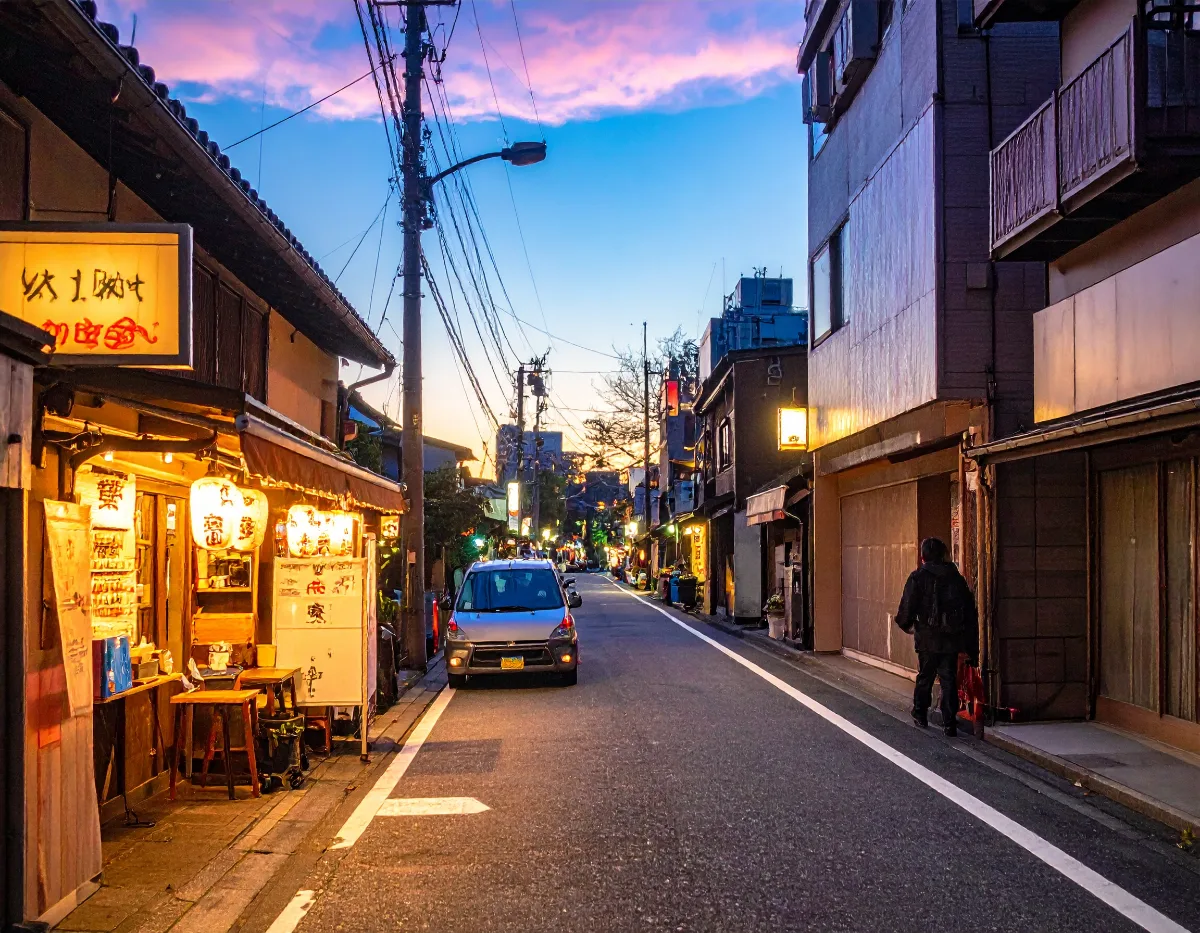
In Kyoto, walk from the station up toward the Higashiyama temple lanes rather than waiting around — at that hour the lanterns are often still lit, a few shopfronts are just raising their shutters, and the stone streets that will be packed with tour groups by midday are entirely yours. Find a café along the way that's already serving and take a slow breakfast before doubling back toward the main sights once they've properly opened. In Osaka, the same quiet settles over the Dotonbori riverside and the streets around it — walk the canal path while it's still nearly empty, then look for a stand-up breakfast counter near the station serving the first coffee and toast of the day rather than waiting on a sit-down place to open. Either city, a public bath or sauna facility near the terminal is a solid alternative if what you want most is hot water on tired shoulders before anything else.
Either way, resist the urge to sit and wait for the grogginess to pass — walking a few blocks, getting some daylight, and having something warm to eat or drink does more for you than another hour of dozing in a chair. By the time the shops and temples open for the day, the streets have filled in around you, and the night on the bus already feels like a small, separate memory.

Check Seats & Fares
Choose your departure area to see routes and seats.