Japan Overnight Bus: The Real Packing List
The Absolute Essentials for a Comfortable Night Bus Ride
Comfort on an overnight bus really comes down to four things: sound, light, posture, and warmth. Riders who do this trip often build their kit around exactly those four points rather than packing everything they own. A pair of earplugs or noise-canceling earbuds and a soft eye mask handle the sound and light half of the equation, while a neck pillow supports your head once the seat is reclined for the night. One small trick makes a real difference: turn the pillow so the opening sits under your chin rather than at the back of your neck, then cinch the strap snug — a loose pillow just flops forward the moment you doze off, right when you need the support most.
The warmth part surprises a lot of first-timers. Even in the middle of summer, the air conditioning tends to pool cold air near the floor, so your feet get chilly long before the rest of you does. A pair of thick socks — or a second pair layered over your regular ones in cooler months — makes a bigger difference than a heavy jacket. Two pairs is the sweet spot; any more and your shoes stop fitting comfortably for the walk to your seat. Pack a compact travel blanket or wrap along with a light cardigan for your shoulders; folded small, it barely takes up space in your bag but it's the first thing you'll reach for once the cabin cools down for the night.
If you're packing in a hurry, here's the short version:
- Earplugs or noise-canceling earbuds
- A soft eye mask
- A neck pillow, cinched snug with the opening under your chin
- Thick socks — two pairs if it's a cooler month
- A compact travel blanket or wrap, plus a light cardigan
- Phone charger and the charging block, not just the cable
- A small pouch for your passport, cash, and other valuables
What to Carry With You vs. What to Check in the Trunk
Once your suitcase goes into the trunk, it's gone until you reach Kyoto, Osaka, or Kobe — there's no getting it back mid-trip. Pack a small bag for your seat and your lap, and put everything else, including anything bulky, into the trunk before boarding. Your carry-on should hold only what you'll actually reach for during the night: your travel pillow, a charger, a snack, and your passport and cash.
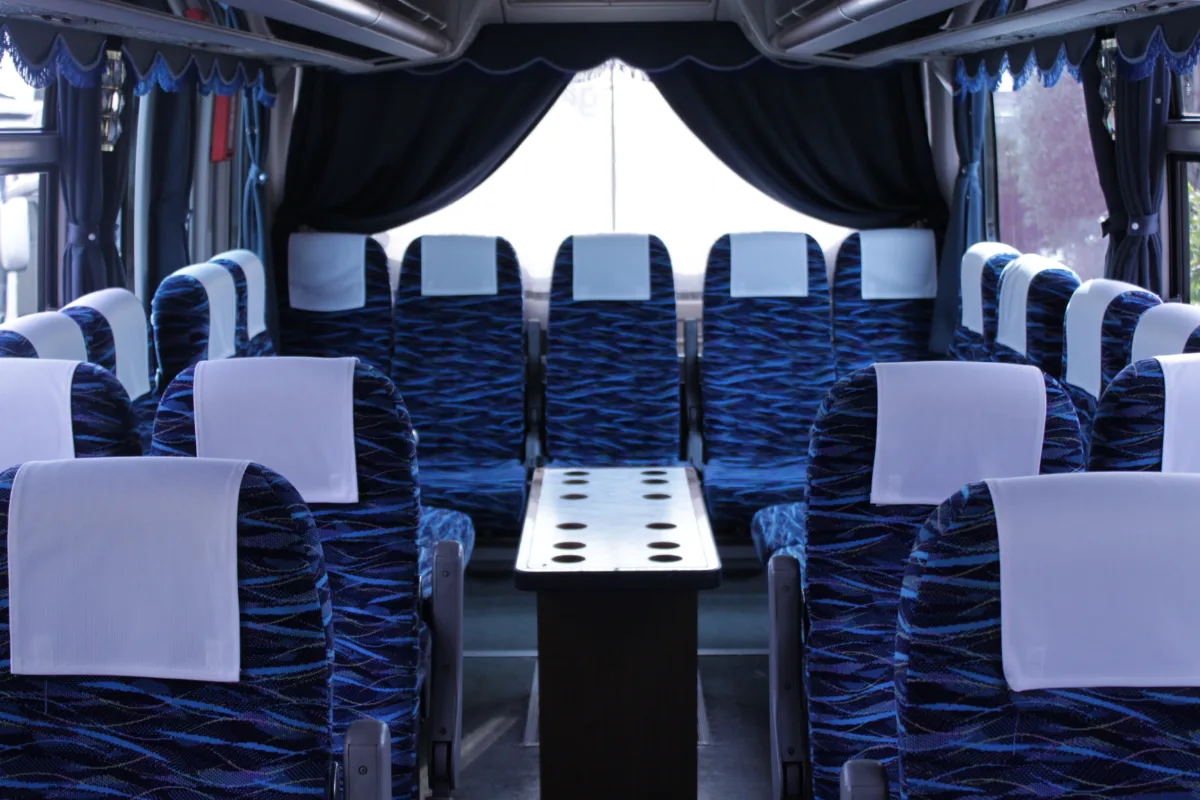
Speaking of which, keep your passport and any cash in a neck pouch or waist pouch that you wear even while you sleep, rather than in the bag on the shelf above your seat. It's the simplest way to avoid a moment of panic if you doze off. If you'd like to know what's on board before you travel, the onboard facilities page lays it out ahead of time, so there's nothing to guess once you're already seated.
Lights-Out Etiquette: How Much Should You Really Hold Back?
Once the cabin lights go off, a bright phone screen is one of the most common things that wakes up neighboring passengers, so it's worth dimming your screen or switching to airplane mode well before you try to sleep. Conversation is the other big one — even a whisper carries surprisingly far in a quiet, mostly sleeping cabin, so it's best to save any chatting with your travel companion for the service area stop instead.
A couple of small habits go a long way too. Switch your phone to silent before boarding so a call or notification doesn't startle the whole row, and skip anything with a strong smell if you're eating on board, since the cabin is a shared, enclosed space for several hours. Because announcements on board, including rest-stop timing, are given in Japanese, it also helps to double-check the departure time posted at the service area before you wander off, rather than relying on catching every word.
Service Area Stops: How Long They Last and How to Use Them
Night buses pull into a service area partway through the trip so everyone can stretch, use the restroom, and pick up a drink. The one rule that matters most here is the departure time the crew announces — the bus leaves on schedule, so treat that time as fixed and give yourself a buffer to get back on board.
Beyond the basics, this stop is also your best window to get ahead of the morning. Brushing your teeth, applying lip balm, and tidying up a little before you get back on the bus means you'll step off in Osaka or Tokyo already feeling presentable, instead of trying to do it all in a rush right after arrival.
The Items Riders Leave Behind Most Often — and How to Avoid It
Chargers and portable battery packs top the list of things left behind on overnight buses, and it's an easy mistake to make since they tend to end up tucked into a seat pocket or wedged by the outlet. Documents, jackets, shoes taken off for the ride, umbrellas, wallets, and other valuables and securities such as gift certificates round out the list of items riders most commonly forget.
One detail worth knowing: it's easy to assume a USB cable alone will do the job, so bring the actual charging block for your phone, not just a cable — that little block is exactly the kind of item that's easy to leave behind once it's tucked away near the outlet. Before you stand up to get off, run through your seat pocket and the floor around your feet one more time. That ten-second habit catches almost everything.
Making the Most of an Early Morning Arrival in Osaka or Tokyo
Arriving early has its own kind of magic — the streets are quiet, the light is soft, and you've got a head start on the day before anyone else does. Pack your bag the night before so you can gather your things quickly and step off without holding up the line behind you.
Before you travel, it's worth checking your destination and arrival time on the route page, so you can plan the first hour of your morning — breakfast, a shrine visit, or just a walk — around when you'll actually be there. A little planning at the packing stage carries all the way through to that first cup of coffee in a new city.

Check Seats & Fares
Choose your departure area to see routes and seats.