Night Bus Luggage Rules in Japan: Size Limits & Tips
Night Bus Luggage Size Limits: Trunk and Carry-On Rules Explained
Each passenger may check one piece of luggage in our trunk, and it must measure no more than 120cm when you add up the length, width, and height — this is our own boarding rule, not an industry standard. Other night bus operators in Japan set their own limits too, and for items you keep with you in the cabin, the general guidance across operators is usually around 100cm total and about 10kg in weight, so your bag fits comfortably at your seat. That figure is a helpful target for packing, though it isn't a number we enforce ourselves.
For checked luggage specifically, the broader guideline seen across long-distance bus companies generally runs to roughly 155cm combined dimensions and 20 to 30kg, though the exact limit varies operator by operator — our own 120cm trunk allowance is narrower than that wider range. If a bag is larger than what our trunk allows, it cannot be checked in. In that case, switching it to a carry-on item you keep with you is the only option, so it helps to pack within the sizes above or check with us in advance.
Why Trunk Space Varies by Bus Type
Not every night bus has the same amount of trunk room, and the reason comes down to onboard restrooms. Buses with a restroom (Bus No.2 and Bus No.3) use part of the lower compartment for the restroom itself, leaving trunk space equivalent to roughly 20 standard suitcases. Buses without a restroom (Bus No.1 and Bus No.4, among others) have a much larger trunk, with room for about 50 suitcases.
If you are traveling with a large suitcase, sports equipment, or several separate bags, it is worth confirming which bus type you will be riding when you make your reservation. You can browse our onboard facilities to see how the cabin and storage areas are laid out before you travel.
What Luggage Drivers Actually Turn Away
Our drivers do decline a small number of items so that loading stays safe and quick for everyone. Fragile musical instruments, surfboards, and bicycles (including folded bikes and bike parts) are not accepted, and anything unusually oversized may also be turned away. Beyond that specific list, the driver has final judgment on the day — an item that is clearly too heavy, too bulky, or too awkward to load safely can be declined even if it is not on the list above.
Winter sports gear is a common gray area: skis and snowboards without a proper protective cover are frequently refused, so bringing yours in a dedicated bag or case makes smooth boarding much more likely. Cash, jewelry, securities, and art or antiques should never go in the trunk — please keep valuables with you in the cabin, since loss, damage, or theft of items left in the trunk is not covered.
Packing Tips for Big or Multiple Bags
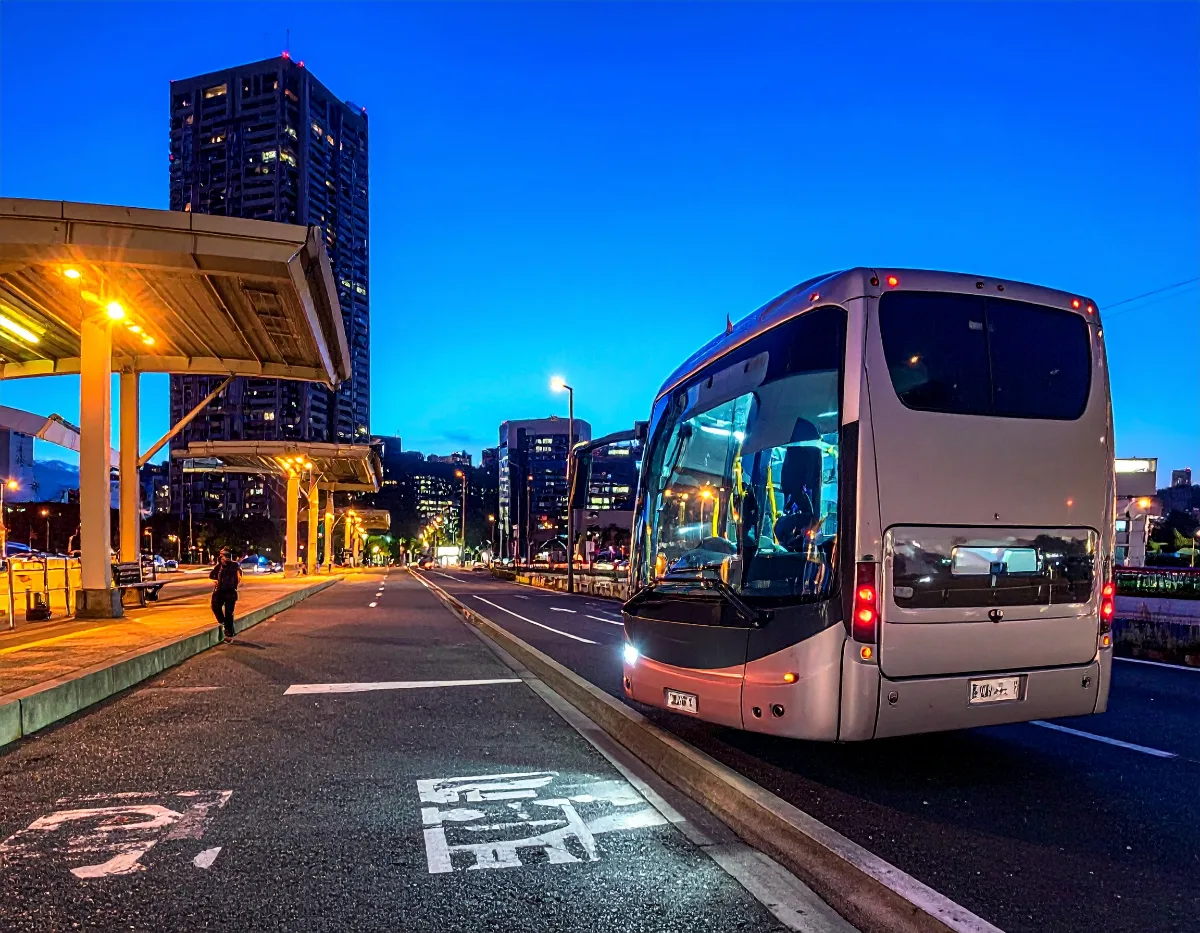
If you are traveling with more than one bag, splitting your belongings between the trunk and the cabin usually works best — put your main suitcase in the trunk and keep a smaller daypack with valuables and essentials at your seat. Cover skis, snowboards, or other awkward-shaped items before you arrive at the bus stop, since a covered bag loads far more smoothly than a bare one.
Since the trunk allowance is one piece per passenger, let us know the number and approximate size of your bags in advance if you are carrying anything unusually large. Visitors bringing several oversized suitcases will also find boarding much easier if they consolidate loose items into fewer, more compact bags before travel day.
Matching Your Trip to Your Luggage
If you are carrying a lot of luggage, it is worth planning your route around a trunk-friendly bus type from the start. Travelers packing light have more flexibility and can freely combine any journey between Tokyo/Yokohama and Kyoto, Osaka, or Kobe, heading straight into sightseeing as soon as they arrive. Take a look at our full list of night bus routes to compare departure points and travel times, then choose a bus type that matches how much you are bringing.
Whichever route you choose, the storage space under your seat is handy for smaller personal items you want within reach during the ride, such as a phone charger, snacks, or a travel pillow.
What to Confirm Before You Book
A little preparation at booking time goes a long way. If you are bringing a large suitcase, unusual equipment, or more than the standard one bag per person, mention the number and size when you reserve your seat so we can plan the loading in advance. Cancellation conditions vary by fare and season, so please check the details shown at the time of booking.

Check Seats & Fares
Choose your departure area to see routes and seats.