2026-09-30
BLOG
Sleeping Well on a Japanese Night Bus
Yes, You Can Sleep Well on a Japanese Night Bus
The cabin lights dim a few hours after departure and stay that way until close to the morning stop, and that "lights-out" period is really the heart of the ride: once it starts, the cabin runs on a quiet, dark, considerate rhythm that most first-time riders aren't expecting. A window seat, reclined back as far as it comfortably goes, plus a simple three-piece kit — eye mask, earplugs, and a neck pillow — packed before you board, decides more about how well you sleep than anything that happens once the bus is moving.
Which Seat Actually Helps You Sleep
If sleep is the priority, take the window side. Aisle seats put you closer to the walkway lights, the neighbors shifting in and out of their seats to stretch or step off at a stop, and the general foot traffic of a bus running through the night. A window seat lets you lean into the corner, control your own space, and avoid most of that movement.
Seat width, legroom, and recline range vary by seat type on this route, so it's worth checking the onboard facilities page for what's fitted on your departure before you book. Whatever seat you end up with, recline gradually rather than all at once — settle it a notch, get comfortable, then ease it back further once you're sure it won't crowd the passenger behind you. If your seat has a footrest, use it to take the pressure off your legs, and if it has a power outlet and a blanket, treat them as tools for a good night rather than afterthoughts: plug in early so you're not fumbling in the dark later, and pull the blanket over your shoulders before you actually feel cold.
What to Pack and Wear So You Actually Stay Warm and Comfortable
The classic night bus packing list hasn't changed much because it works: a light jacket or cardigan, a mask, slippers, socks, and a pair of leg warmers. Bus cabins run cooler than you'd expect once the engine settles into cruising, and your feet get cold long before the rest of you does. Bring your own slippers rather than counting on the bus to supply them, and swap your shoes for them as soon as you're seated.
A blanket is often provided at your seat, which covers most of what you need, but if you run cold easily, a compact travel blanket or an inflatable neck pillow of your own is worth the extra bag space. Skip strongly scented food and drinks before boarding — coffee, garlic, fried snacks — not because they're against any rule, but because odors linger in a closed, quiet cabin for hours and other passengers will be trying to sleep too. A rice ball, a sandwich, or something plain is the better call. Many seats have a power outlet built in, but there's usually no USB port, so bring a cable with a plug adapter rather than relying on a USB port alone. If you're only packing three things, make them the eye mask, the earplugs, and the neck pillow — everything else is a bonus.
The Unspoken Rules After Lights-Out
Once the lights go down, the cabin runs on an unspoken code, and most of it comes down to one idea: a bus at night is quieter than you think, and quiet things carry. Even a whispered conversation between two seats can reach halfway down the aisle once everything else has gone silent, so conversations that were fine at the terminal get saved for the next rest stop instead.
The same goes for phone screens — dim the brightness right down, or switch to a reading app with a dark background, before you check anything after lights-out. If you want to get up and stretch before the next stop, keep your steps light and use the seatback rails rather than reaching for your neighbor's headrest — restroom breaks are easiest to save for the stops themselves, which come around every couple of hours. None of this is complicated; it's mostly just the ordinary courtesy of a room full of strangers trying to sleep at the same time.
What Happens at the Rest Stops — and How to Use Them to Sleep Better
Night buses on this route stop roughly every two to three hours, for about fifteen to twenty minutes each time, as a matter of course for safety — the rhythm of stopping is built into the schedule rather than a rare event.
Use each stop with a plan: restroom first, then a quick stretch outside for fresh air, then a snack or drink if you want one, in that order, so you're not still deciding what to buy when the driver is ready to leave. Keep an eye on the clock rather than the platform — it's easy to lose track of time in a well-lit service area in the middle of the night, and buses on tight overnight schedules don't wait. If you're comparing which departure or seat type fits your plans best, the full route and seat availability page is the place to check before you book.
You've Arrived Early — Here's How to Spend the Morning
Arriving well before sunrise in a city like Kyoto or Osaka can feel disorienting if you don't have a plan for the gap before anything opens, but that gap is actually one of the better times to be there. Two model mornings cover most of what people want out of it.
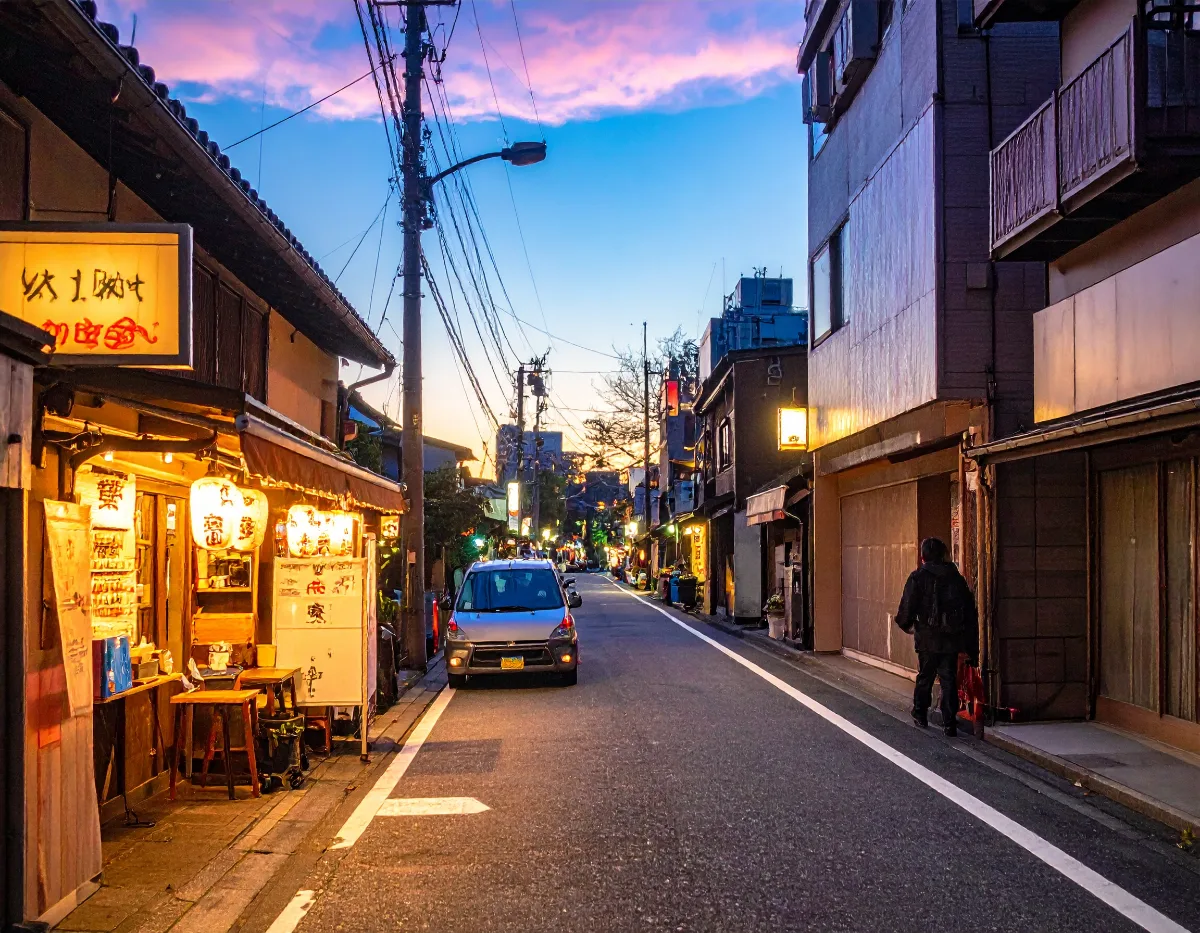
In Kyoto, walk from the station up toward the Higashiyama temple lanes rather than waiting around — at that hour the lanterns are often still lit, a few shopfronts are just raising their shutters, and the stone streets that will be packed with tour groups by midday are entirely yours. Find a café along the way that's already serving and take a slow breakfast before doubling back toward the main sights once they've properly opened. In Osaka, the same quiet settles over the Dotonbori riverside and the streets around it — walk the canal path while it's still nearly empty, then look for a stand-up breakfast counter near the station serving the first coffee and toast of the day rather than waiting on a sit-down place to open. Either city, a public bath or sauna facility near the terminal is a solid alternative if what you want most is hot water on tired shoulders before anything else.
Either way, resist the urge to sit and wait for the grogginess to pass — walking a few blocks, getting some daylight, and having something warm to eat or drink does more for you than another hour of dozing in a chair. By the time the shops and temples open for the day, the streets have filled in around you, and the night on the bus already feels like a small, separate memory.

Check Seats & Fares
Choose your departure area to see routes and seats.
日本語版
日本の夜行バスでぐっすり眠る方法
そう、日本の夜行バスでもぐっすり眠れます
出発から数時間後に車内の照明は暗くなり、朝の停車地点に近づくまでその状態が続きます。この「消灯」の時間帯こそが乗車の核心であり、一度始まれば車内は静かで暗く、思いやりに満ちたリズムで進んでいきます。これは初めて乗る人の多くが予想していないことです。窓側の座席を選び、無理のない範囲でできるだけ倒したリクライニング、そして乗車前に用意しておくアイマスク・耳栓・ネックピローという簡単な三点セット。これらが、バスが走り出した後に起こるどんなことよりも、あなたがどれだけよく眠れるかを左右します。
実際に睡眠の質を左右する座席の選び方
睡眠を最優先するなら窓側を選びましょう。通路側の座席は通路の照明に近く、隣の乗客が体を伸ばしたり停車地点で降りたりするために席を出入りする動きにも近く、さらには夜通し走るバスの一般的な人の往来にもさらされます。窓側の座席なら壁際に寄りかかることができ、自分のスペースを自分で管理でき、そうした動きの大半を避けられます。
座席の幅、足元の広さ、リクライニングの範囲は、この路線でも座席タイプによって異なるため、予約前に自分が乗る便の車内設備ページを確認しておく価値があります。どの座席になったとしても、リクライニングは一気に倒すのではなく段階的に。まず一段階倒して落ち着き、後ろの乗客の迷惑にならないと確信できてからさらに倒しましょう。座席にフットレストがあれば脚への負担を軽くするために使い、電源コンセントや毛布が備わっていれば、それらを「後回しの付属品」ではなく「快眠のための道具」として扱ってください。暗くなってから手探りにならないよう早めに充電を始め、実際に寒さを感じる前に毛布を肩まで引き上げておきましょう。
何を持って、何を着れば本当に暖かく快適に過ごせるか
夜行バスの定番の持ち物リストがほとんど変わらないのは、それが実際に効果的だからです。薄手の上着やカーディガン、マスク、スリッパ、靴下、そしてレッグウォーマー一組。バスの車内は、エンジンが巡航状態に落ち着くと思っている以上に冷えるもので、体の他の部分よりも先に足先が冷えてきます。バスがスリッパを用意してくれることを期待せず、自分のスリッパを持参し、着席したらすぐに靴から履き替えましょう。
座席には毛布が備え付けられていることが多く、たいていの用は足りますが、寒がりな人はコンパクトなトラベルブランケットや自分用の膨らませるネックピローを持っていく価値があります。乗車前に、コーヒー、にんにく、揚げ物のスナックなど香りの強い食べ物や飲み物は避けましょう。何かのルールに反するからではなく、密閉された静かな車内では何時間もにおいが残り、他の乗客も眠ろうとしているからです。おにぎりやサンドイッチなど、においの少ないものの方が良い選択です。多くの座席には電源コンセントが備え付けられていますが、USBポートがないことが多いので、USBポートだけに頼らず、プラグ付きのケーブルを持参しましょう。荷物を三つだけに絞るなら、アイマスク、耳栓、ネックピローにしてください。それ以外はあれば嬉しいおまけ程度のものです。
消灯後の暗黙のルール
照明が消えると、車内はある種の暗黙のルールで動くようになります。その大部分は一つの考え方に集約されます。夜のバスは思っている以上に静かで、静かな空間では音が伝わりやすいということです。二つの座席の間でのささやき声の会話でさえ、他がすべて静まり返った後では通路の半分あたりまで届いてしまいます。そのため、ターミナルでは問題なかった会話も、次の休憩地点まで取っておくことになります。
スマートフォンの画面についても同様です。消灯後に何かを確認する前には、画面の明るさをしっかり下げるか、背景が暗いリーディングアプリに切り替えましょう。次の停車地点の前に立ち上がって体を伸ばしたい場合は、足音を軽くし、隣の乗客のヘッドレストに手をかけるのではなく座席の背もたれのレールを使いましょう。トイレ休憩は、数時間おきにやってくる停車地点そのものに取っておくのが一番簡単です。これらはどれも複雑なことではなく、ほとんどは同じ時間に眠ろうとしている見知らぬ人たちでいっぱいの部屋での、ごく普通の心遣いにすぎません。
休憩地点で何が起きるか、そしてそれをどう活用してよりよく眠るか
この路線の夜行バスは、安全上の措置として当然のことながら、およそ二〜三時間おきに、一回あたり十五分から二十分ほど停車します。停車のリズムはめったにない出来事ではなく、スケジュールに組み込まれた仕組みです。
それぞれの休憩は計画を立てて活用しましょう。まずトイレ、次に外に出て軽く体を伸ばして外気を吸い、それから欲しければ軽食や飲み物を買う、という順番です。そうすれば、運転手が出発の準備をしているときにまだ何を買うか迷っている、ということがなくなります。ホームの様子ではなく時計に気を配りましょう。夜中の明るいサービスエリアでは時間の感覚を失いやすく、余裕のない夜行スケジュールで走るバスは待ってくれません。どの便やどの座席タイプが自分の計画に合うか比較したい場合は、予約前に路線と座席の空き状況の全体ページを確認するのが良いでしょう。
早く到着してしまった場合の朝の過ごし方
京都や大阪のような街に日の出よりずっと早く到着すると、何も開いていない時間帯をどう過ごすか計画がなければ戸惑うかもしれません。しかし実はその時間帯こそ、その街を訪れるのに最も良い時間の一つです。多くの人が求めているものをカバーする、二つのモデルコースがあります。
京都では、駅から待つのではなく東山の寺町の路地へと歩いて向かいましょう。その時間帯にはまだ提灯が灯っていることが多く、いくつかの店はちょうどシャッターを上げ始めたところで、昼にはツアー団体でいっぱいになる石畳の通りが、その時間はすべて自分だけのものになります。途中ですでに営業しているカフェを見つけてゆっくり朝食を取り、主要な観光地がきちんと開いてから引き返しましょう。大阪でも同じような静けさが道頓堀の川沿いとその周辺の通りを包みます。まだほとんど人のいない運河沿いの道を歩き、それから座って待つ店を探すのではなく、駅の近くでその日最初のコーヒーとトーストを出している立ち食いの朝食カウンターを探しましょう。どちらの街でも、何より温かいお湯で疲れた肩をほぐしたいなら、ターミナル近くの銭湯やサウナ施設も確かな選択肢です。
いずれにしても、座って眠気が抜けるのを待ちたい気持ちは抑えましょう。数ブロック歩いて日の光を浴び、温かい食べ物や飲み物を口にすることの方が、椅子でもう一時間うとうとするよりもずっと効果があります。店や寺院がその日の営業を始める頃には、通りはすっかり人で埋まり、バスで過ごした夜はもう小さな、別の思い出のように感じられるはずです。